Japan sent a spacecraft toward one of Mars's moons with a return ticket, and a veteran NASA telescope signed off after more than 20 years on the job. Back on Earth, physicists kept a single particle of antimatter under control for months, and a new gadget can send smells over the internet. Here's what caught our eye this week.
Space & astronomy
Japan launches MMX to bring home bits of Phobos
An H3 rocket lifted off from Tanegashima carrying JAXA's MMX probe, bound for the moons of Mars. The plan is to land on Phobos, scoop up surface samples and return them to Earth in 2031. It would be the first time we hold material from a Martian moon, which could help settle how these odd little moons formed.
Psyche spacecraft hits the gas toward a metal-rich asteroid
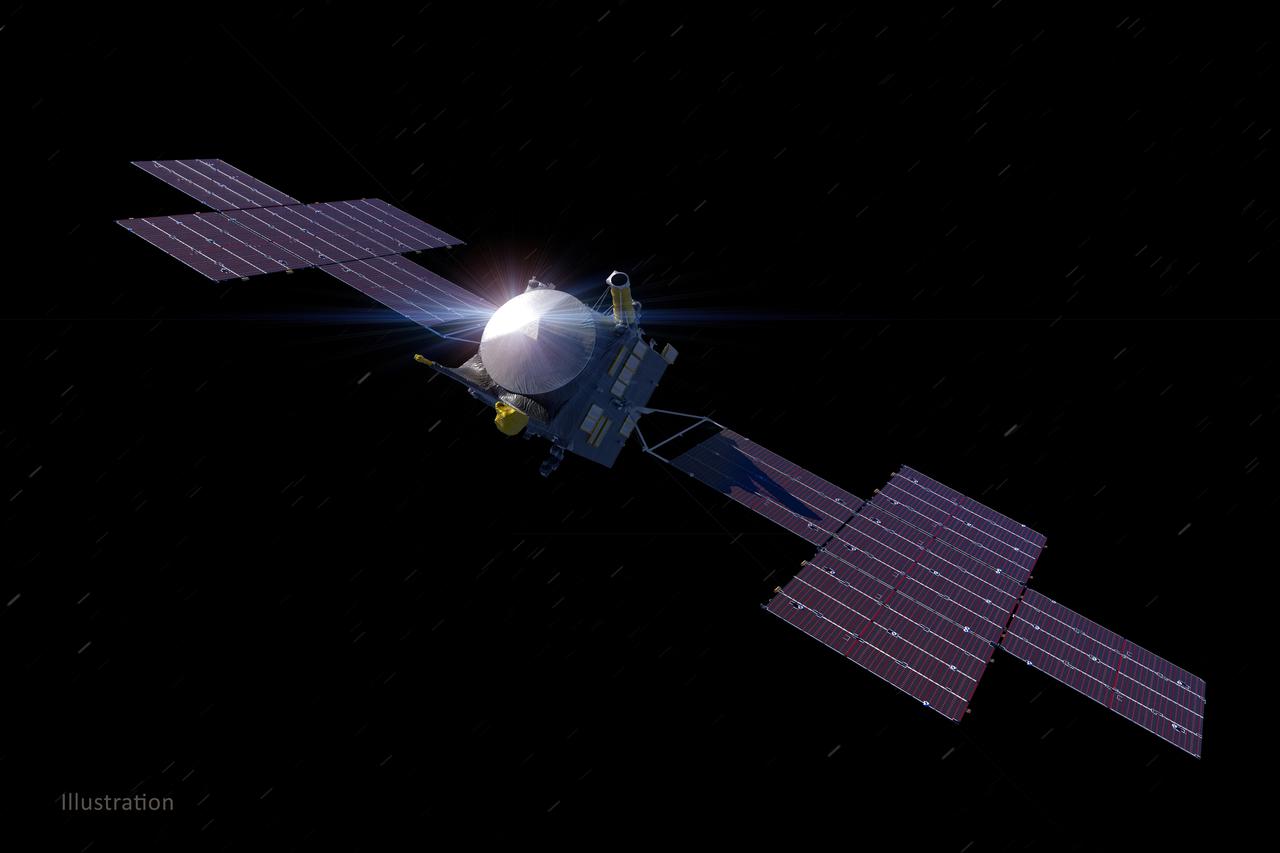
After a speed-boosting swing past Mars, NASA's Psyche probe is now running its electric thrusters almost nonstop. Each push is tiny, about the weight of an AA battery, but it adds up to a cruise speed of over 100,000 mph. Its target is the asteroid Psyche in the main belt, with arrival expected by summer 2029.
Farewell to Swift, NASA's hunter of cosmic explosions
The Swift observatory has ended its science mission after its orbit sank low enough that atmospheric drag keeps it from pointing steadily. Built for a two-year mission, it ran for nearly 22, catching more than 2,000 gamma-ray bursts and over 1,400 supernovae. Its archive stays open to the public, so the science continues.
Physicists trap a single positron and hold it for months
A Northwestern University team kept one lone positron, the antimatter twin of the electron, inside a trap of electric and magnetic fields chilled to near absolute zero. Using microwaves, they nudged it between energy levels on command. Next they want to compare its magnetism with the electron's; any mismatch would shake up what we know about matter and antimatter.
The crocodile secret: 240 million years of chasing warmth
University College London researchers analyzed more than 7,000 fossils and found that crocodile relatives have always followed warm climates, spreading toward the poles in hot eras and retreating to the tropics in cold ones. That habit, plus their knack for going a long time on little food, helped them ride out the asteroid that wiped out the dinosaurs.
A 518-million-year-old fossil redraws the starfish family tree
Researchers in China described Yujingia, a small bottle-shaped animal with a jelly-like body and feathery tentacles for catching food. It sits close to the common ancestor of starfish and their relatives, suggesting that ancestor fed with tentacles rather than burrowing like a worm. It fills in a blurry chapter of early animal history.
Scentronic: a system that sends smells over the internet
Ohio State University researchers built an electronic nose that recognizes a scent and sends only its data; on the other end, a wristband, necklace or handheld device releases a matching aroma. So far it knows five smells, like coffee and orange, and it's still a lab prototype. It hints at video calls, games or shopping you could smell.
Apple launched its first folding phone worldwide at around $2,000, and demand was so strong that delivery dates slipped to late January. Reviewers praised the design and nearly invisible hinge, but noted many apps aren't yet adapted to the screen. It's Apple's big bet to reshape the foldable market.
Roland shrinks the JUPITER-8 and debuts the n/vision
Roland unveiled two Boutique synths: the JUPITER-08, marking 45 years of the classic JUPITER-8, and the n/vision, a brand-new wavetable synth. Both have built-in speakers, run on batteries or USB-C, include a sequencer and effects, and cost $549.99 each. A compact way to put legendary sounds on your desk.
Fender Studio Pro 8.2 adds MIDI 2.0 and guitar/piano separation
The latest version of Fender's DAW can now pull guitar and piano out of a mix, handy for sampling, MIDI transcription or replacing parts. It also adds MIDI 2.0 support (macOS and Linux for now), a low-latency mode for vocal tuning and multiple marker tracks. It's available to eligible license holders and Studio Pro+ subscribers.